
Welcome to LIPhy
The laboratory is a joint CNRS/University of Grenoble Alpes unit and is attached to the Physics, Engineering, Materials pole of the university. The laboratory is largely oriented towards the interfaces of physics with other disciplines, in particular life sciences and environmental sciences, mechanics or applied mathematics.
News
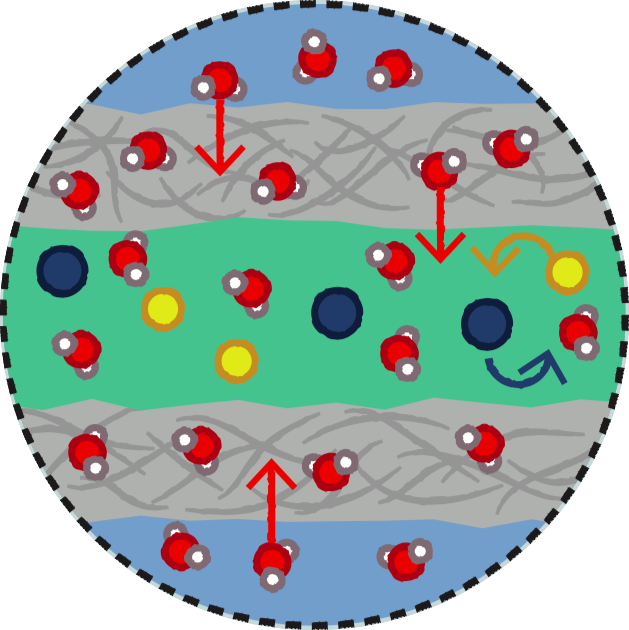
Cyril Picard, a member of LIPhy, contributed to the writing of "Étonnants Matériaux", a new book published by CNRS Éditions that invites readers to explore the behind-the-scenes world of materials science research, at the intersection of innovation, environmental challenges, and the applications of tomorrow.
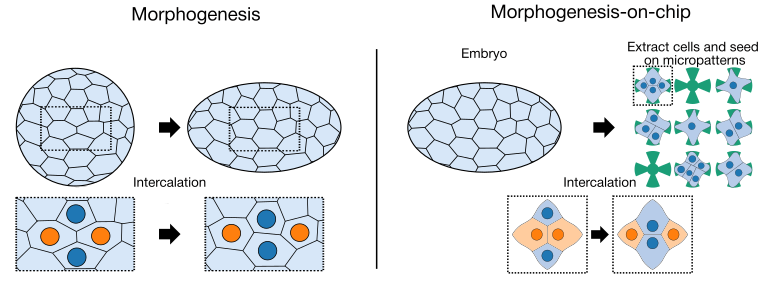
A minimal in vitro experiment isolates the mechanical motors of cellular intercalation and offers promising possibilities for diagnostic support
Conference
MATERIALS 2026 International Conference: Call for contributions
From November 16, 2026 to November 20, 2026
Agglomération grenobloise
The MATERIALS 2026 international conference will be held from November 16 to 20, 2026, in Grenoble (Isère). This event is organized by the French Materials Federation (FFM), which brings together 26 scientific and technical associations involved in materials. It is part of the MATERIALS series of conferences, which have been held every four years since 2002 and have established themselves as the must-attend French-language event for all academic and industrial players in the world of materials.

Publication
A simple-to-use analytical guide to optical sectioning with patterned illumination
On June 8, 2026
How do you choose the right technique for fast optical sectioning, and what are the critical parameters that influence its performance? This is the focus of a recent article by researchers at LIPhy and ENS Paris.
Seminars
Eva Maria Zunzunegui-Bru (LEPMI, Grenoble)
Seminar
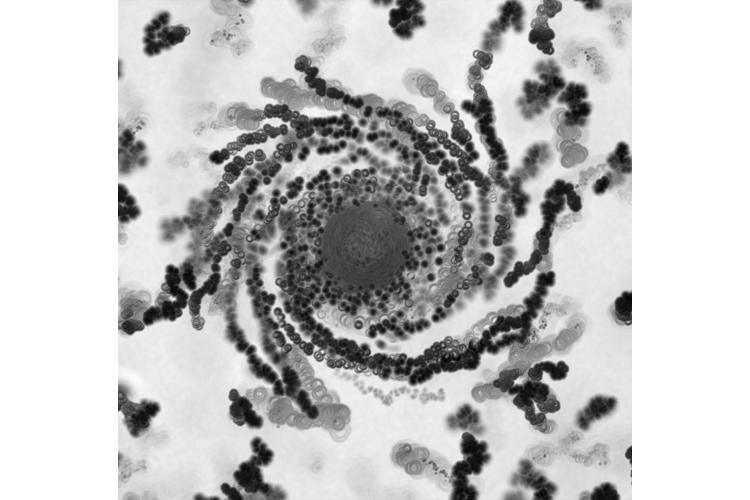
Odd collective phenomena in light-driven microalgae - Isabelle Eisenmann (University of Amsterdam, the Netherlands)
On September 28, 2026
Isabelle Eisenmann (University of Amsterdam, the Netherlands)