
- Share
- Share on Facebook
- Share on LinkedIn
Séminaire
On March 13, 2026
Eloina CORRADI - (Post-Doc, MicroTiss) || Mona MOUKRATI - (PhD, MODI)
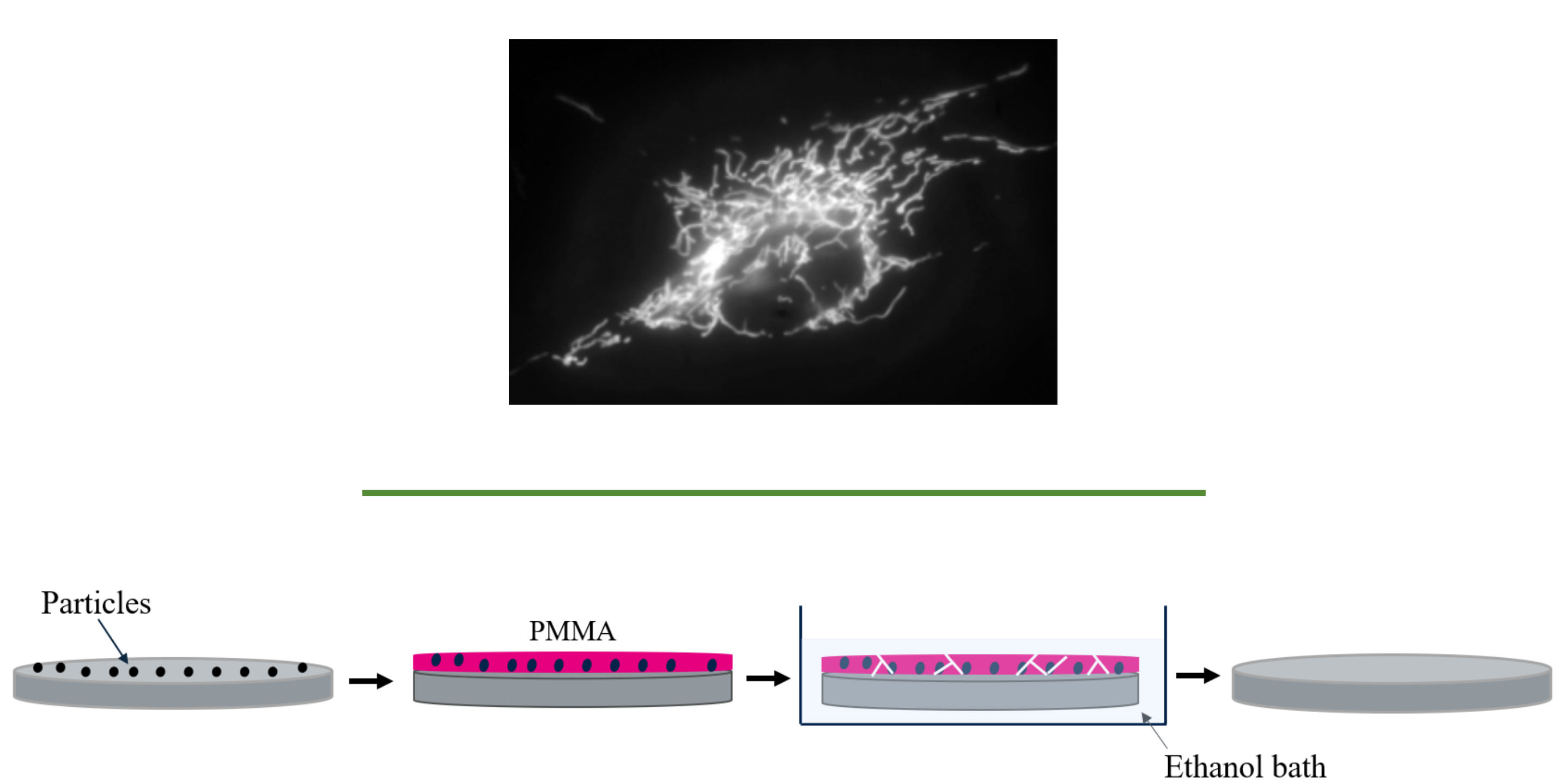
Mitochondrial mechano-remodeling
Eloina CORRADI - (Post-Doc, MicroTiss)
Mitochondria are double-membrane organelles that sustain the bioenergetic metabolism of cells by producing ATP at the level of the cristae, convoluted folds of the inner membrane. ATP production efficiency and mitochondrial morphology, including cristae architecture, are tightly linked. Consequently, by being coupled to mitochondrial function, the reshaping of mitochondria across spatial scales regulates the cellular bioenergetic and metabolic states. Mechanical stimuli have recently been shown to modulate cellular metabolism, thus impacting physiological (e.g. cell migration, proliferation, death) and pathological (e.g. cancer progression) processes.
Here, using a unique biomechanical tool to stretch cells, we show that mechanical stimulation drastically re-shape mitochondria across spatial scale, deforming and modulating both external and internal architecture, impacting cell metabolism.
Substrate cleaning by polymer coat, crack & peel.

Mona MOUKRATI- (PhD, MODI)
The continuous miniaturization of microelectronic devices imposes increasingly stringent requirements on surface cleanliness, as nanoparticles above 10 nm critically threaten device performance. Conventional cleaning methods often damage delicate nanostructures or lack sufficient nanoscale efficiency.
This work investigates polymer-film-based cleaning via controlled delamination of polymethyl methacrylate (PMMA), triggered by crack formation when the coated wafer is immersed in ethanol. The influence of experimental parameters on crack morphology and propagation is systematically examined to better understand the underlying cracking mechanism. Applied to ceria-contaminated silicon wafers, this crack-induced delamination process achieves over 80% particle removal.
Date
11:00
Localisation
LIPhy, salle de conférence
- Share
- Share on Facebook
- Share on LinkedIn