
- Share
- Share on Facebook
- Share on LinkedIn
Thesis defence
On July 9, 2026
Niloofar Pishkari (MicroTiss, LIPhy)
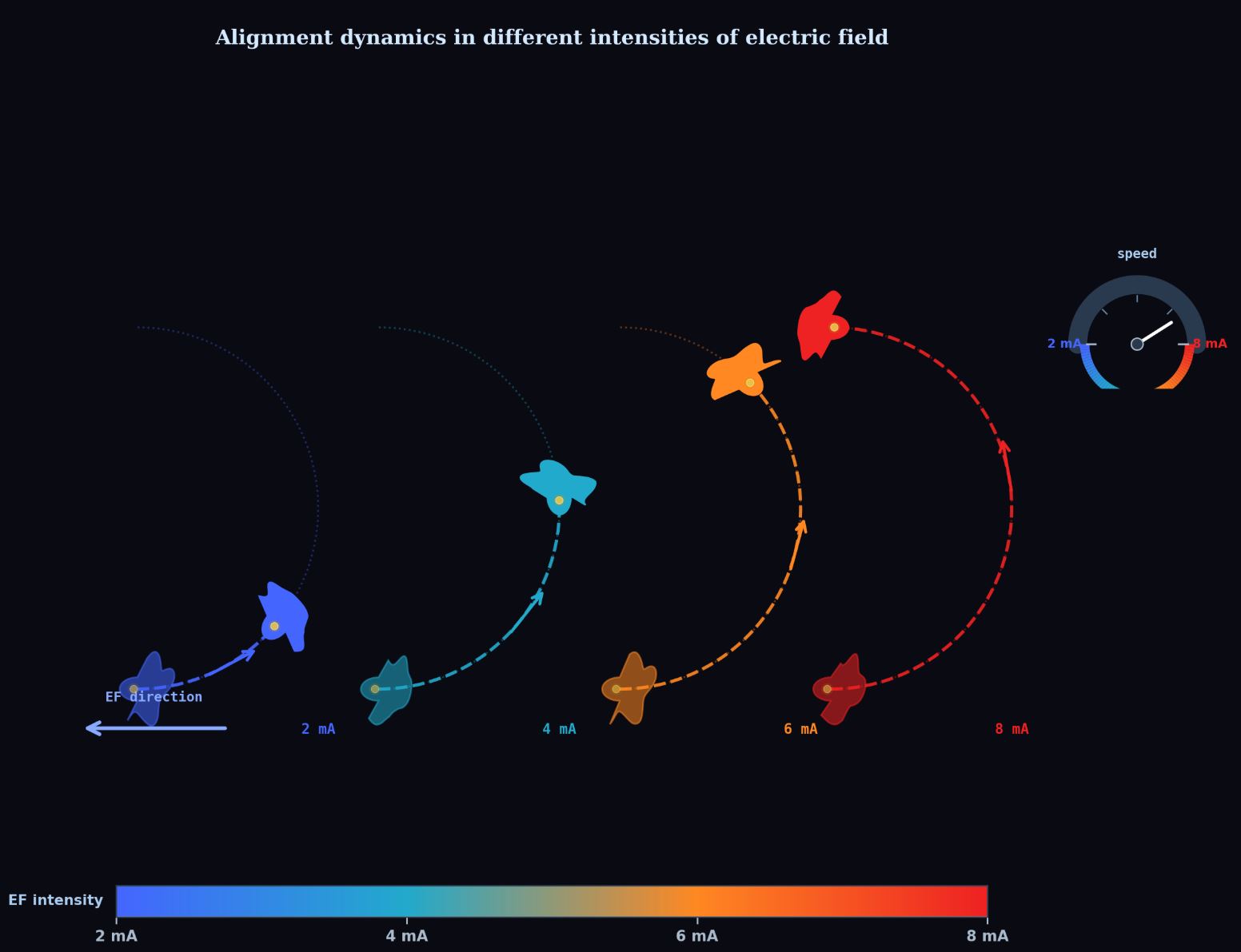
Cell migration is a fundamental biological process that enables organisms to respond to environmental stimuli and maintain homeostasis. Disruptions in this process can lead to functional impairment and disease. Rather than moving randomly, many cells migrate directionally in response to external cues, a behavior essential for processes such as morphogenesis, cancer invasion, and wound healing. Understanding the mechanisms underlying directional migration, therefore, requires investigating physiologically relevant guiding stimuli. Among these, electric fields represent a precise and biologically significant cue. In this study, we used the SCHEEPDOG platform to apply programmable electric fields of varying intensities to keratocytes and quantitatively analyze their migratory behavior. Our results show that electric field stimulation induces robust directional migration while increasing migration speed in an intensity-dependent manner. Cells initially moving randomly progressively align with the field vector, with higher field strengths accelerating this alignment process. Notably, although both migration speed and alignment dynamics are modulated by field intensity, the overall geometry of migration trajectories remains unchanged. Cells initially migrating opposite to the field reorient by executing turns whose size and shape are independent of stimulation strength, indicating that turning dynamics are preserved. A key finding of this work is the distinct role of mitochondrial ATP in regulating directional migration. Inhibition of mitochondrial ATP production impaired steering, reduced directional responsiveness, and disrupted alignment dynamics, particularly under weak electric fields. In contrast, stronger fields partially compensated for this deficit, restoring alignment despite reduced speed and slower response dynamics. These results indicate that while mitochondrial ATP is not strictly required for basal motility, it is essential for efficient reorientation and polarity refinement. Furthermore, asymmetric mitochondrial distribution emerges as an important determinant of cell polarity, suggesting that intracellular energy localization contributes to the spatial coordination of directional migration. Together, our findings demonstrate that electrical stimulation can independently tune migration speed and directional alignment without altering intrinsic turning behavior, and highlight the critical role of cellular bioenergetics in migratory control. This work provides new insights into how biophysical cues and metabolic states interact to regulate cell migration.
Date
14:00
Localisation
LIPhy, conference room
- Share
- Share on Facebook
- Share on LinkedIn